
When your baby starts solids, the #1 question most parents ask is: “How many meals a day should we do?” The honest answer is: it changes over time—and it’s totally normal for it to feel inconsistent at first.
Quick answer (featured snippet-friendly):
Most babies start solids at about 6 months and begin with small amounts once a day, then gradually move to 2 mealsand eventually 3 meals as they get more interested and skilled—while breast milk or formula remains the main source of nutrition through the first year.
Step 1: Start solids around 6 months (milk stays primary)
The CDC notes babies can begin solid foods at about 6 months (and introducing foods before 4 months is not recommended).
The AAP similarly encourages waiting until around 6 months to introduce solids.
In the early weeks, solids are mostly about practice—learning textures, swallowing, and routines—so milk feeds still do the heavy lifting.
Step 2: A realistic progression (what many families do)
Around 6 months: 1 meal per day (tiny portions)
UK NHS guidance captures this well: at the very start, babies often only need a small amount once a day, at a time that suits you both.
Parent tip: Pick your “best baby” time (often mid-morning or early afternoon). Keep it low-pressure.
7–8 months: 2 meals per day
Once your baby is comfortable with one daily solid “practice,” you can add a second meal—often breakfast + dinner, or lunch + dinner—whatever fits your day.
9–12 months: 3 meals per day (plus milk feeds)
As solids increase, your baby’s routine starts to look more like “meals.” The CDC also describes offering something to eat or drink every 2–3 hours—often landing around 3 meals and 2–3 snacks daily for toddlers/young children.
(For many babies nearing 12 months, that “meal rhythm” starts to form—still alongside milk feeds.)
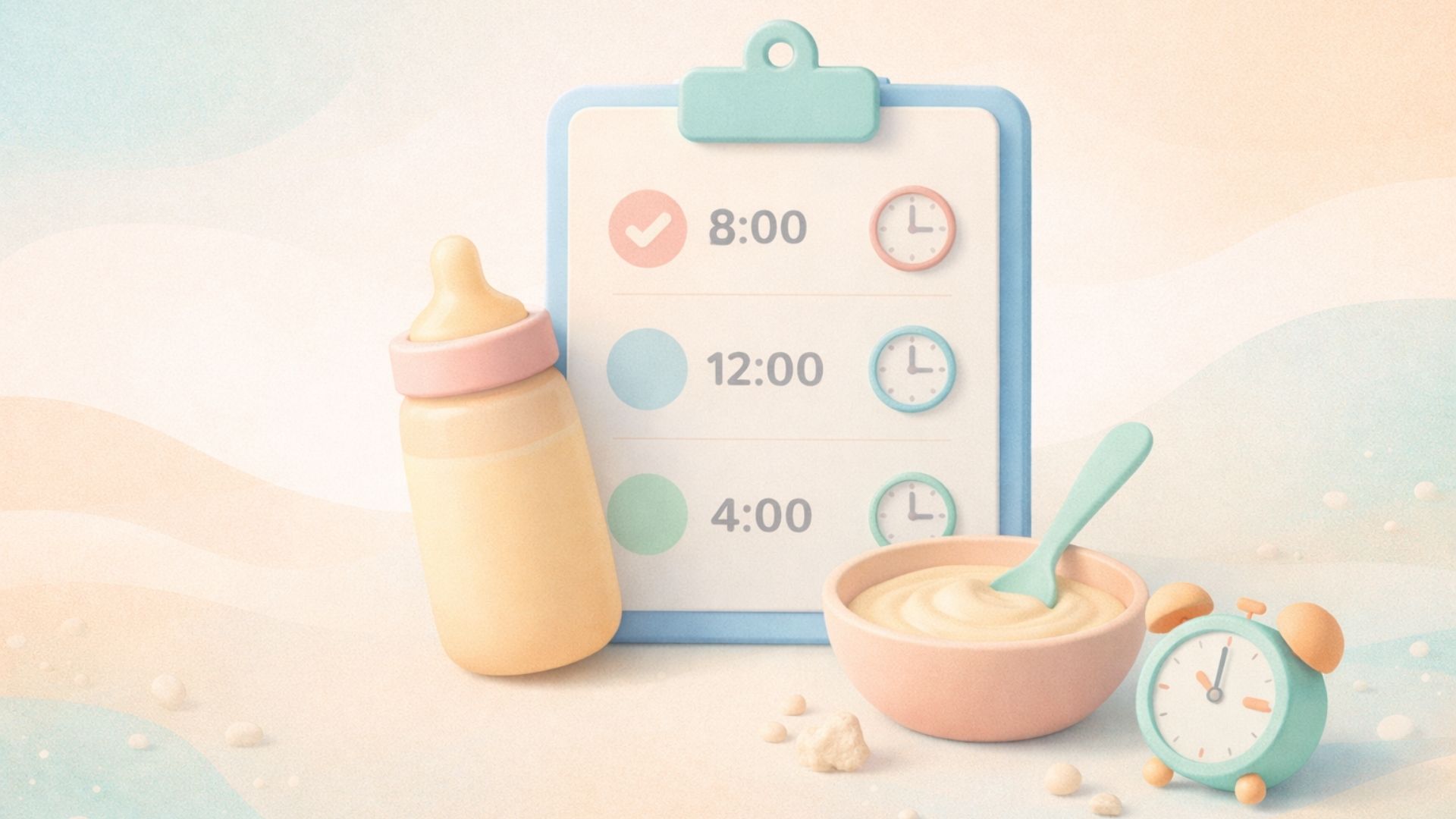
Step 3: Sample daily schedules (simple templates)
These are templates, not rules—follow your baby’s hunger/fullness cues.
Schedule A: Early solids (about 6 months)
- Milk feed
- Solid meal #1 (a few teaspoons)
- Milk feeds the rest of the day
Schedule B: Building routine (about 7–8 months)
- Milk feed
- Breakfast solids
- Milk feed
- Dinner solids
- Milk feeds as needed
Schedule C: 3-meal pattern (about 9–12 months)
- Milk feed
- Breakfast solids
- Milk feed
- Lunch solids
- Milk feed
- Dinner solids
- Milk feed (often bedtime)
NHS advice also suggests offering solids when baby isn’t too full and not too hungry (so they’re willing to explore).
The best “rule” to follow: keep it flexible
If your baby skips a meal, eats two bites, or suddenly eats more than usual—normal. Your goal is consistency over weeks, not perfection every day.
Babywiz idea: This is exactly where tracking helps—log the time, food, and reaction/notes so you can spot patterns (especially when you’re introducing new foods).
Medical note: This article is educational and does not replace medical advice. If you have concerns about growth, feeding difficulties, or allergies, check in with your pediatrician.
Many babies begin with one small solid meal per day (a few teaspoons), alongside regular breast milk or formula.
Often after your baby is comfortable with one daily practice meal—many families add a second meal around 7–8 months, based on interest and readiness (not a strict date).
As babies get closer to 9–12 months, many settle into a 3-meal pattern—while still getting significant nutrition from breast milk or formula.
Early on, usually no. Solids start as practice, and milk remains the main nutrition source through the first year.
A routine helps, but it doesn’t have to be perfect. Choose times when your baby is calm and not overly hungry or overly full.
That can be normal early on. Focus on consistency, safe textures, and following hunger/fullness cues—then discuss concerns with your pediatrician if weight gain or feeding seems off.