

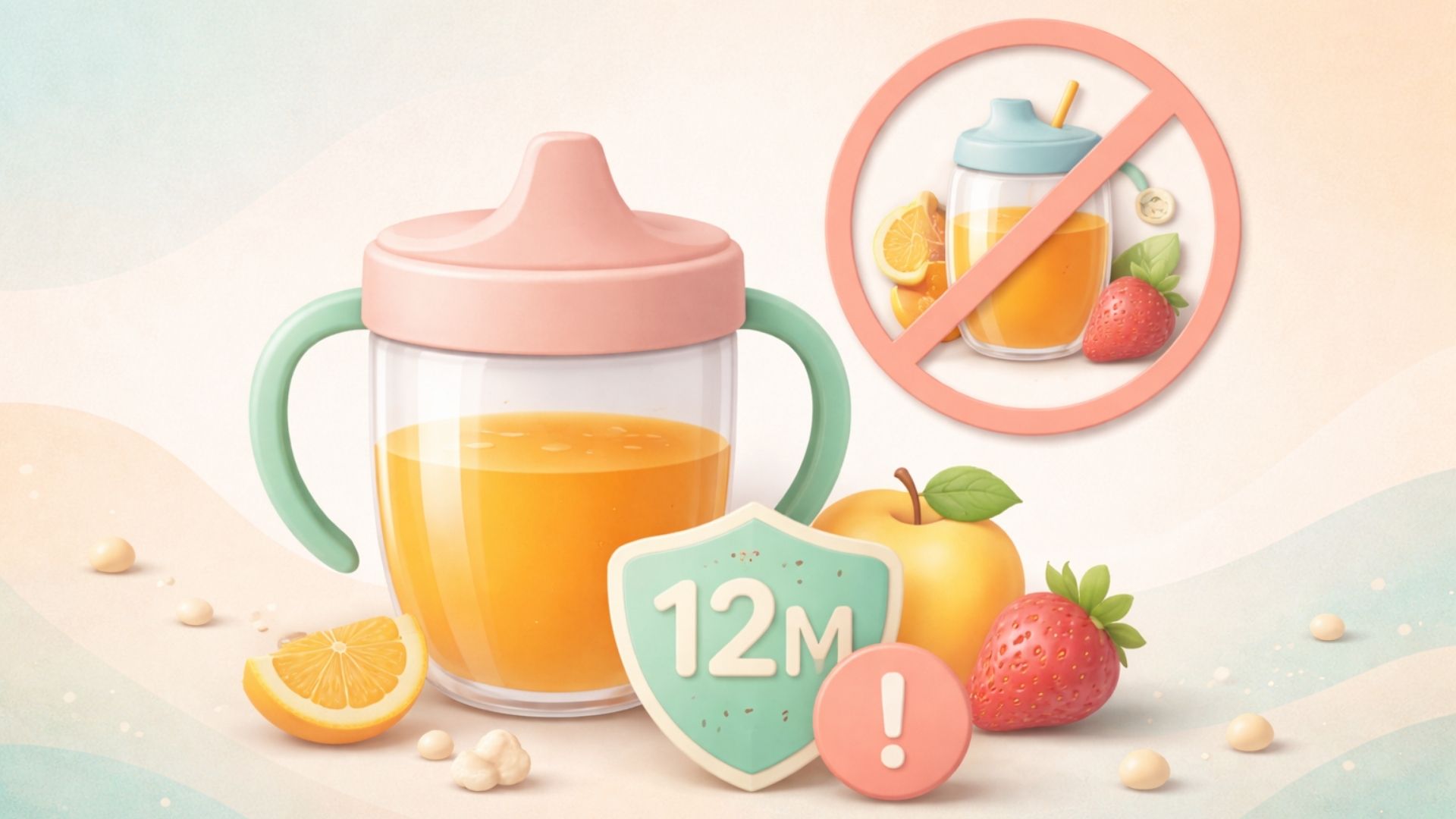
If you’re starting solids, it’s totally normal to wonder: Can my baby have a little juice? Maybe your family offered it, maybe daycare mentioned it, or maybe you’re just trying to get more fluids in.
Here’s the clear, parent-friendly bottom line:
Quick answer (featured snippet-friendly):
The American Academy of Pediatrics (AAP) recommends no fruit juice for babies under 12 months because it offers no nutritional benefit in the first year and may increase risks like tooth decay and a preference for sweeter flavors.
Why juice isn’t recommended in the first year
1) Juice doesn’t add nutrition babies need
AAP guidance is blunt: fruit juice offers no nutritional benefit to infants under age 1.
Babies in the first year should get their primary nutrition and hydration from breast milk or infant formula (and age-appropriate solids as they start).
2) It can raise dental risk and train a “sweet preference”
The AAP notes juice can increase the risk of tooth decay and may encourage a preference for sweeter flavors over water.
Even before many teeth appear, frequent sugar exposure can still set up habits that matter later.
3) It can crowd out better options
Babies have tiny tummies. If juice becomes a “filler,” it can displace more nutrient-dense choices—milk/formula and whole foods. This is one reason health guidance consistently favors whole fruit (fiber + less concentrated sugar) over juice for older children too.
What should babies drink instead?
A practical, safe approach:
- Under 12 months: breast milk or infant formula as the main drinks.
- When solids begin (around 6 months): small sips of plain water can be offered with meals, while milk/formula remains primary. (This keeps hydration simple and supports cup skills.)
- For “fruit benefits”: offer whole fruit (mashed/pureed/soft pieces) instead of juice. CDC guidance for infant feeding standards specifically supports serving whole fruit (mashed/pureed) and no fruit juice under 12 months.
What about juice after 12 months?
Even after age 1, the AAP recommends keeping juice limited and treating it more like an occasional addition—not an all-day drink. For toddlers 1–3, they suggest up to 4 ounces per day, served as part of a meal (not in a bottle/sippy cup for constant sipping, and not at bedtime).
A quick “parent reality” note
If your baby has already tasted juice, don’t panic. You can simply reset the routine: keep juice out of the first year, and focus on milk/formula + water with meals + whole fruits.
Medical note: This article is for education and does not replace medical advice. If you’re worried about hydration, feeding, weight gain, or persistent diarrhea/vomiting, contact your pediatrician.
The AAP recommends not giving fruit juice to infants under 12 months because it offers no nutritional benefit in the first year.
AAP guidance notes juice can increase risk of tooth decay and create a preference for sweeter flavors, and it doesn’t add nutrition babies need in the first year.
Breast milk or infant formula should be the main drinks in the first year; water can be offered in small sips when solids start, and whole fruit is preferred over juice.
AAP guidance suggests limiting juice for toddlers; for ages 1–3, up to 4 ounces per day as part of a meal is a common guideline, and it shouldn’t be sipped all day or given at bedtime.
AAP guidance says juice is not appropriate for treating dehydration or managing diarrhea.
Leave a Reply