

Category: Articles

  • Postpartum Mental Health in the First Year: What to Expect and When to Get Help

    Postpartum Mental Health in the First Year: What to Expect and When to Get Help

    If you’re in the first 6 months after having a baby (or approaching the first year) and you feel more emotional than you expected, please hear this first: you’re not “failing,” and you’re not alone. Your body, brain, sleep, identity, and daily life all shift at once—and that’s a lot for any human nervous system.

    The first 6 months can feel intense—and it can still be hard later

    Many parents think postpartum mood changes only happen in the first few weeks. But postpartum mental health concerns can show up anytime in the first year. MedlinePlus notes postpartum depression may occur soon after delivery or up to a year later.  A CDC study also found that depressive symptoms can appear later (around 9–10 months), even in people who felt okay earlier.  

    That’s why it helps to treat mental health like a “first-year check-in,” not a one-time postpartum milestone.

    Baby blues vs. postpartum depression and anxiety

    Baby blues are very common—tearfulness, mood swings, feeling overwhelmed—and often improve within about 2 weeks. (If it’s intense or lasts longer, it may be more than baby blues.) The U.S. Office on Women’s Health describes postpartum depression as symptoms like feeling sad/anxious/overwhelmed that last longer than 2 weeks and can interfere with daily life.  

    Postpartum depression/anxiety are treatable medical conditions. The American Psychiatric Association notes peripartum/perinatal depression can include sadness and/or anxiety, with changes in sleep, appetite, and energy, and estimates it affects about 1 in 7 women.  The National Institute of Mental Health also explains perinatal depression can range from mild to severe, and in rare cases can put parent and baby at risk.  

    Signs it’s time to reach out

    Consider talking to your healthcare provider if you notice:

    • Feeling down, numb, hopeless, or “not yourself” most days
    • Constant worry, racing thoughts, panic, or dread
    • Trouble sleeping even when the baby sleeps (beyond normal sleep disruption)
    • Loss of interest, appetite changes, or feeling disconnected
    • Intrusive thoughts that scare you (you don’t need to handle these alone)

    And seek urgent help immediately if you have thoughts of harming yourself or your baby, or feel out of control.

    You deserve screening and support (and it’s okay to ask for it)

    ACOG recommends screening for depression and anxiety during pregnancy and at postpartum visits.  If your checkups feel rushed, you can still say:

    “I’ve been struggling emotionally—can we do a postpartum depression/anxiety screening?”

    Gentle, realistic ways to support yourself (without adding pressure)

    • Name the basics: sleep, food, hydration, fresh air—tiny wins count.
    • Lower the bar: “good enough” is the goal in the newborn months.
    • Ask for specific help: “Can you hold the baby for 20 minutes while I shower?” works better than “I’m overwhelmed.”
    • Track patterns: mood, sleep, and triggers—simple notes can help you and your provider see what’s going on.

    If you need help today (U.S. resources)

    • National Maternal Mental Health Hotline (24/7): Call or text 1-833-TLC-MAMA (1-833-852-6262)  
    • 988 Suicide & Crisis Lifeline (24/7): Call/text/chat 988  

    Medical note: This article is educational and does not replace medical advice. If you’re worried about safety or severe symptoms, seek urgent help.

    Is it normal to feel anxious or sad in the first 6 months postpartum?

    Many parents feel emotionally up and down early on. If symptoms are intense or last more than 2 weeks, it may be postpartum depression/anxiety and it’s worth reaching out. 

    Can postpartum depression start months after birth?

    Yes. Postpartum depression can occur up to a year after delivery, and symptoms may appear later even if you felt okay at first.

    What’s the difference between baby blues and postpartum depression?

    Baby blues are usually milder and improve within about two weeks. Persistent or worsening symptoms that interfere with life may be postpartum depression.

    Should my OB/GYN or pediatrician screen me for postpartum depression?

    ACOG recommends screening for depression and anxiety during pregnancy and postpartum visits. If it wasn’t offered, you can request it.

    Where can I get help right now in the U.S.?

    You can call/text the National Maternal Mental Health Hotline (1-833-TLC-MAMA) 24/7. For crisis support, call/text 988.

    What if I’m having scary intrusive thoughts?

    Intrusive thoughts can happen with postpartum anxiety/OCD and are a reason to reach out—not a reason for shame. If you feel unsafe, seek urgent help immediately.
  • Juice for Babies Under 12 Months: Why It’s Not Recommended

    Juice for Babies Under 12 Months: Why It’s Not Recommended

    If you’re starting solids, it’s totally normal to wonder: Can my baby have a little juice? Maybe your family offered it, maybe daycare mentioned it, or maybe you’re just trying to get more fluids in.

    Here’s the clear, parent-friendly bottom line:

    Quick answer (featured snippet-friendly):

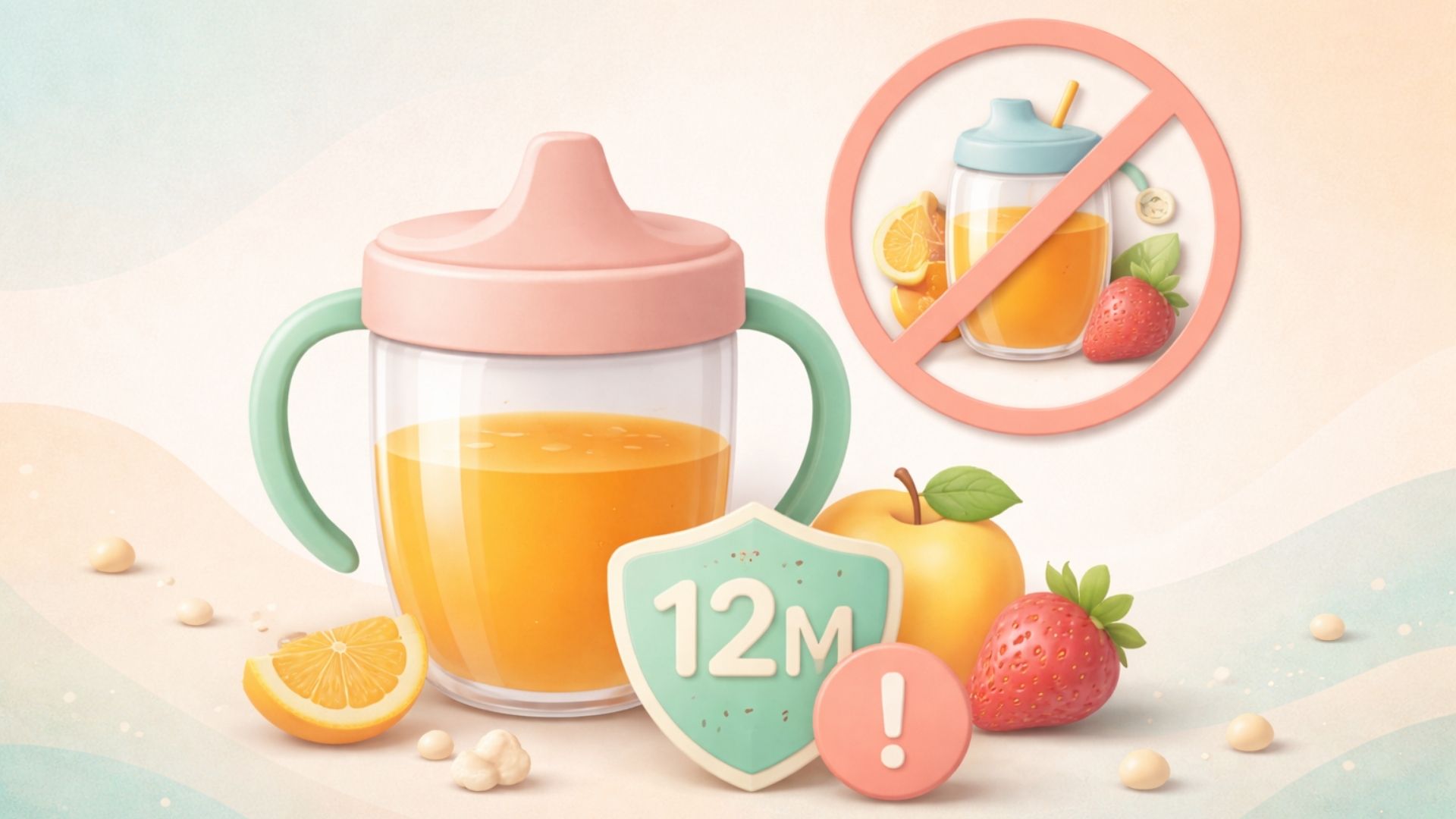
    The American Academy of Pediatrics (AAP) recommends no fruit juice for babies under 12 months because it offers no nutritional benefit in the first year and may increase risks like tooth decay and a preference for sweeter flavors.  

    Why juice isn’t recommended in the first year

    1) Juice doesn’t add nutrition babies need

    AAP guidance is blunt: fruit juice offers no nutritional benefit to infants under age 1.  

    Babies in the first year should get their primary nutrition and hydration from breast milk or infant formula (and age-appropriate solids as they start).  

    2) It can raise dental risk and train a “sweet preference”

    The AAP notes juice can increase the risk of tooth decay and may encourage a preference for sweeter flavors over water.  

    Even before many teeth appear, frequent sugar exposure can still set up habits that matter later.

    3) It can crowd out better options

    Babies have tiny tummies. If juice becomes a “filler,” it can displace more nutrient-dense choices—milk/formula and whole foods. This is one reason health guidance consistently favors whole fruit (fiber + less concentrated sugar) over juice for older children too.  

    What should babies drink instead?

    A practical, safe approach:

    • Under 12 months: breast milk or infant formula as the main drinks.  
    • When solids begin (around 6 months): small sips of plain water can be offered with meals, while milk/formula remains primary. (This keeps hydration simple and supports cup skills.)  
    • For “fruit benefits”: offer whole fruit (mashed/pureed/soft pieces) instead of juice. CDC guidance for infant feeding standards specifically supports serving whole fruit (mashed/pureed) and no fruit juice under 12 months.  

    What about juice after 12 months?

    Even after age 1, the AAP recommends keeping juice limited and treating it more like an occasional addition—not an all-day drink. For toddlers 1–3, they suggest up to 4 ounces per day, served as part of a meal (not in a bottle/sippy cup for constant sipping, and not at bedtime).  

    A quick “parent reality” note

    If your baby has already tasted juice, don’t panic. You can simply reset the routine: keep juice out of the first year, and focus on milk/formula + water with meals + whole fruits.

    Medical note: This article is for education and does not replace medical advice. If you’re worried about hydration, feeding, weight gain, or persistent diarrhea/vomiting, contact your pediatrician.

    Can babies under 12 months have 100% fruit juice?

    The AAP recommends not giving fruit juice to infants under 12 months because it offers no nutritional benefit in the first year. 

    Why is juice not recommended for babies under 1 year?

    AAP guidance notes juice can increase risk of tooth decay and create a preference for sweeter flavors, and it doesn’t add nutrition babies need in the first year. 

    What should my baby drink instead of juice?

    Breast milk or infant formula should be the main drinks in the first year; water can be offered in small sips when solids start, and whole fruit is preferred over juice.

    When can toddlers have juice, and how much?

    AAP guidance suggests limiting juice for toddlers; for ages 1–3, up to 4 ounces per day as part of a meal is a common guideline, and it shouldn’t be sipped all day or given at bedtime. 

    Is juice okay for diarrhea or dehydration?

    AAP guidance says juice is not appropriate for treating dehydration or managing diarrhea.

  • Starting Solids Feeding Schedule (From 1–2 Meals to 3 Meals)

    Starting Solids Feeding Schedule (From 1–2 Meals to 3 Meals)

    When your baby starts solids, the #1 question most parents ask is: “How many meals a day should we do?” The honest answer is: it changes over time—and it’s totally normal for it to feel inconsistent at first.

    Quick answer (featured snippet-friendly):

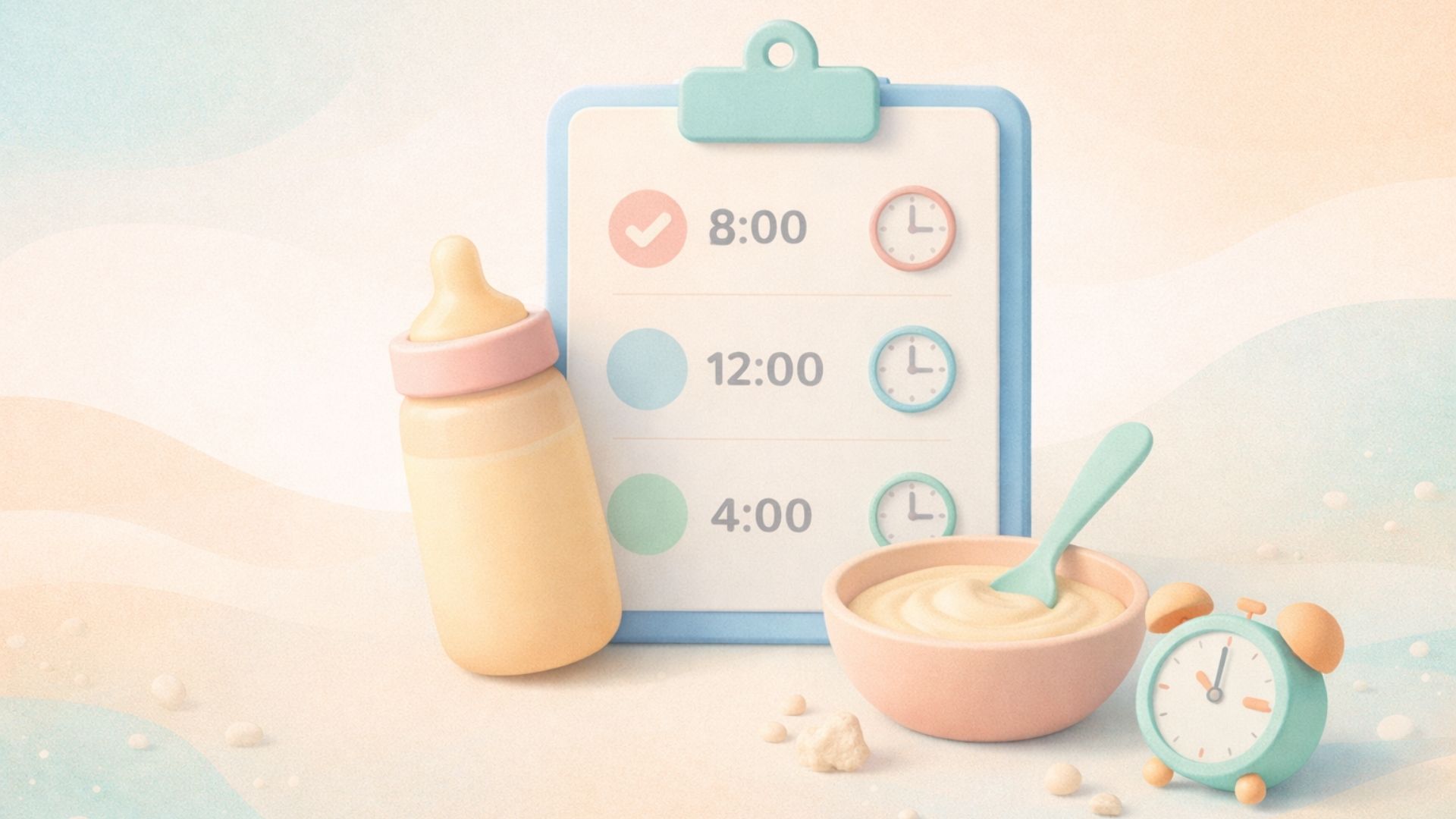
    Most babies start solids at about 6 months and begin with small amounts once a day, then gradually move to 2 mealsand eventually 3 meals as they get more interested and skilled—while breast milk or formula remains the main source of nutrition through the first year.  

    Step 1: Start solids around 6 months (milk stays primary)

    The CDC notes babies can begin solid foods at about 6 months (and introducing foods before 4 months is not recommended).  

    The AAP similarly encourages waiting until around 6 months to introduce solids.  

    In the early weeks, solids are mostly about practice—learning textures, swallowing, and routines—so milk feeds still do the heavy lifting.

    Step 2: A realistic progression (what many families do)

    Around 6 months: 1 meal per day (tiny portions)

    UK NHS guidance captures this well: at the very start, babies often only need a small amount once a day, at a time that suits you both.  

    Parent tip: Pick your “best baby” time (often mid-morning or early afternoon). Keep it low-pressure.

    7–8 months: 2 meals per day

    Once your baby is comfortable with one daily solid “practice,” you can add a second meal—often breakfast + dinner, or lunch + dinner—whatever fits your day.

    9–12 months: 3 meals per day (plus milk feeds)

    As solids increase, your baby’s routine starts to look more like “meals.” The CDC also describes offering something to eat or drink every 2–3 hours—often landing around 3 meals and 2–3 snacks daily for toddlers/young children.  

    (For many babies nearing 12 months, that “meal rhythm” starts to form—still alongside milk feeds.)

    Step 3: Sample daily schedules (simple templates)

    These are templates, not rules—follow your baby’s hunger/fullness cues.

    Schedule A: Early solids (about 6 months)

    • Milk feed
    • Solid meal #1 (a few teaspoons)
    • Milk feeds the rest of the day

    Schedule B: Building routine (about 7–8 months)

    • Milk feed
    • Breakfast solids
    • Milk feed
    • Dinner solids
    • Milk feeds as needed

    Schedule C: 3-meal pattern (about 9–12 months)

    • Milk feed
    • Breakfast solids
    • Milk feed
    • Lunch solids
    • Milk feed
    • Dinner solids
    • Milk feed (often bedtime)

    NHS advice also suggests offering solids when baby isn’t too full and not too hungry (so they’re willing to explore).  

    The best “rule” to follow: keep it flexible

    If your baby skips a meal, eats two bites, or suddenly eats more than usual—normal. Your goal is consistency over weeks, not perfection every day.

    Babywiz idea: This is exactly where tracking helps—log the timefood, and reaction/notes so you can spot patterns (especially when you’re introducing new foods).

    Medical note: This article is educational and does not replace medical advice. If you have concerns about growth, feeding difficulties, or allergies, check in with your pediatrician.

    What is a good starting solids feeding schedule for 6 months?

    Many babies begin with one small solid meal per day (a few teaspoons), alongside regular breast milk or formula.

    When should I move from 1 meal to 2 meals a day?

    Often after your baby is comfortable with one daily practice meal—many families add a second meal around 7–8 months, based on interest and readiness (not a strict date).

    When do babies usually eat 3 meals a day?

    As babies get closer to 9–12 months, many settle into a 3-meal pattern—while still getting significant nutrition from breast milk or formula.

    Should solids replace a milk feed?

    Early on, usually no. Solids start as practice, and milk remains the main nutrition source through the first year. 

    Do I need to feed solids at the same time every day?

    A routine helps, but it doesn’t have to be perfect. Choose times when your baby is calm and not overly hungry or overly full.

    What if my baby eats very little at meals?

    That can be normal early on. Focus on consistency, safe textures, and following hunger/fullness cues—then discuss concerns with your pediatrician if weight gain or feeding seems off.

  • Baby Food Textures & Spoon Skills (Starting Solids Without Stress)

    Baby Food Textures & Spoon Skills (Starting Solids Without Stress)

    If starting solids has you wondering “Is this purée too thin?” or “Should my baby be using a spoon yet?”—you’re not alone. Texture and spoon skills are two of the biggest everyday questions parents have in the first months of solids.

    Quick takeaway (featured snippet-friendly):

    A helpful approach is to start with soft, age-appropriate textures and gradually offer more variety (smooth → mashed/lumpy → finger foods) as your baby can manage them, while also letting your baby practice with a spoon (even if it’s messy!).  

    Why texture matters (it’s not just “preference”)

    The CDC highlights that introducing different tastes and textures supports skills like chewing and fine motor development (grabbing, pinching, bringing food to the mouth).  

    In other words: texture is part of development, not just a feeding style choice.

    A simple texture progression (what “moving up” can look like)

    There isn’t one perfect schedule, but reputable guidance generally encourages moving beyond only smooth purées once baby is ready.

    • The NHS suggests that once you start solids (around 6 months), try moving from puréed/blended foods to mashed, lumpy, or finger foods as soon as your baby can manage them to support chewing and swallowing skills.  
    • Health Canada also emphasizes offering a variety of soft textures and finger foods from six months of age(mashed, puréed, lumpy, finely minced/ground, tender-cooked).  

    A parent-friendly “texture check”

    A quick rule many parents use: If you can easily squash it between your fingers, it’s usually soft enough for early practice (with supervision and safe shapes).

    Purée thickness: how thick is “right”?

    Early spoon foods should be thick enough to stay on the spoon, not runny like soup. Thick textures help babies practice moving food around the mouth (and keep meals less drippy).

    Easy ways to thicken without stress:

    • Mash with a fork instead of blending ultra-smooth
    • Add a small amount of infant cereal or mashed beans/lentils
    • Stir in thicker foods like yogurt (if appropriate for your baby)

    (And yes—different babies have different preferences. Some love smooth textures at first; others do better with mashed or finger foods sooner. The NHS notes both patterns can be normal.)  

    Spoon skills: when and how to start

    Spoon skills are a learning process. You can support them early without expecting “neat eating.”

    Try the “two-spoon” routine

    A very practical technique is:

    • You feed with one spoon
    • Your baby holds another spoon to explore

    This idea is commonly recommended in parenting guidance to build independence while keeping meals moving.  

    Use a preloaded spoon (great for self-feeding practice)

    You can load a spoon with thicker purée and place it into your baby’s hand so they can bring it to their mouth. This supports hand-to-mouth coordination and confidence.  

    Keep it upright + responsive

    WHO complementary feeding guidance emphasizes responsive feeding—help babies eat while paying attention to hunger/fullness cues (no pressure, no battles).  

    This is especially useful with spoon practice: the goal is exploration and skill-building, not perfection.

    What if my baby “hates lumps” or gags on texture?

    A little gagging or pushing food out can happen while babies learn. If your baby consistently struggles with any texture beyond smooth foods for a prolonged period, it can be worth discussing with your pediatrician—sometimes a simple plan (tiny texture steps) helps.

    Medical note: This article is educational and does not replace medical advice. If you’re worried about swallowing safety or growth, check in with your pediatrician.

    When should I move from purées to mashed or finger foods?

    Many guidelines encourage moving from smooth purées to mashed/lumpy/finger foods as soon as your baby can manage them, after starting solids around 6 months. 

    How thick should a baby’s purée be?

    Aim for “spoonable”—thick enough to stay on the spoon. This can make self-feeding practice easier.

    Should I give my baby a spoon even if I’m feeding them?

    Yes—giving a spoon to hold (while you use another spoon) is a common strategy to build skills early, even though it’s messy.

    My baby gags on thicker textures—should I stop?

    Occasional gagging can be part of learning textures. Go slowly, keep textures soft, and speak with your pediatrician if gagging is frequent or you’re concerned.

    Do I need to do spoon-feeding, BLW, or both?

    Many families do a mix. What matters most is safe, soft textures and responsive feeding—offering a variety of textures helps babies build skills.

  • Choking Risks When Your Baby Starts Solid Foods (and How to Lower Them)

    Choking Risks When Your Baby Starts Solid Foods (and How to Lower Them)

    Starting solids is exciting… and a little scary. If choking is on your mind, that’s completely normal. The good news: most choking risk can be reduced with a few simple habits—how your baby sits, how you prepare foods, and what you avoid at first.

    Quick answer (featured snippet-friendly):

    To lower choking risk, feed your baby seated upright and supervised, offer soft, age-appropriate textures, and modify high-risk foods like whole grapes, hot dogs, nuts, popcorn, and hard raw produce.  

    Gagging vs. choking: what’s the difference?

    • Gagging is common when babies learn textures. It can look dramatic (tongue forward, noisy sounds), but baby is usually still breathing.
    • Choking means the airway is blocked and baby may be unable to breathe, cough, or make sound.

    If you’re ever unsure, it’s worth taking an infant first-aid class so you feel confident recognizing true choking and responding quickly. The Red Cross provides infant choking guidance and emphasizes acting fast when the airway is blocked.  

    The biggest choking risk factors (and what to do instead)

    1) Eating position and supervision

    Babies should eat fully upright in a high chair (or supportive seat) and be watched closely. Avoid eating in car seats, strollers, or while crawling/walking with food.

    2) High-risk foods you should avoid or modify

    The American Academy of Pediatrics (HealthyChildren.org) and the CDC list common choking hazards for babies and young children. Here are the big ones:

    • Whole grapes, berries, cherries, cherry/grape tomatoes (cut lengthwise and into small pieces)  
    • Hot dogs / sausages / meat sticks (avoid rounds; cut into thin strips)  
    • Nuts, seeds, popcorn (generally avoid in early years; use safe forms like thinly spread nut butter if appropriate)  
    • Hard raw fruits/veggies like raw apple chunks or carrot sticks (cook until soft or grate/shred)  
    • Sticky or hard candies, marshmallows, chewing gum (avoid)  

    The CDC’s choking hazards page is especially useful because it lists specific “avoid/modify” examples by food type.  

    3) Texture matters more than you think

    Early on, choose foods that smush easily between your fingers (soft-cooked veggies, ripe avocado, yogurt, well-cooked shredded meats). If it’s hard, round, sticky, or crumbly in a way that forms clumps, change the prep or skip it for now.

    What about baby-led weaning (BLW)?

    Many parents worry BLW automatically means more choking. Research published in Pediatrics found that when families using a baby-led approach also received guidance to minimize choking risk, they did not appear more likely to choke than spoon-fed babies. In other words: method matters less than safety practices.  

    Be ready—just in case

    Even with perfect prep, babies can choke on almost anything. Consider learning infant choking first aid (back blows/chest thrusts are typically taught for infants). The Red Cross provides an overview and strongly encourages quick action and training.  

    Medical note: This article is for education and does not replace medical advice or hands-on first-aid training. If your baby is choking or having trouble breathing, seek emergency help immediately.

    What foods are the biggest choking hazards for babies?

    Whole grapes and cherry tomatoes, hot dogs, nuts/seeds, popcorn, hard raw fruits/vegetables (like raw apples/carrots), and sticky/hard candies are common hazards. 

    How should I cut grapes and cherry tomatoes for a baby?

    Cut them lengthwise (not into round “coins”), then into smaller pieces appropriate for your baby’s skill level.

    Is gagging normal when starting solids?

    Yes—gagging can be part of learning textures. Choking is different and involves an airway blockage and trouble breathing.

    Does baby-led weaning increase choking risk?

    A study in Pediatrics suggests that with proper choking-risk guidance, a baby-led approach does not appear more likely to cause choking than traditional feeding. 

    Should my baby eat in a car seat or stroller?

    It’s safer for babies to eat seated upright and supervised, not reclined or moving, to reduce choking risk.

    What should I do if my baby is choking?

    Get emergency help immediately and follow infant choking first-aid guidance from a trusted organization (and consider taking an infant first-aid class).

  • When Can Babies Drink Water?

    When Can Babies Drink Water?

    If you’ve ever wondered, “My baby looks thirsty… can I give water?”—you’re not alone. Water feels like the most harmless thing in the world. But for young babies, timing and amount really matter.

    Quick answer (featured snippet-friendly):

    Most babies can start having small sips of water around 6 months, typically when solids begin. Babies under 6 months usually don’t need water—breast milk or formula provides the hydration they need.  

    Why babies under 6 months usually shouldn’t drink water

    Before 6 months, babies’ nutrition and hydration needs are designed to be met by breast milk and/or infant formula. Adding water too early can fill a tiny stomach and reduce the amount of milk/formula they take in (which is where calories and nutrients come from). Major pediatric guidance supports offering water only when babies are older and starting solids.  

    Also, it’s important not to dilute formula with extra water. Formula should be prepared exactly as directed because changing the water-to-formula ratio can be unsafe. (If you ever have concerns about formula access, your pediatrician can help you find safe options and support.)  

    When to introduce water: around 6 months

    Once your baby is about 6 months old and starting complementary foods, you can begin offering water in small amounts. The AAP’s HealthyChildren guidance suggests that around 6 months, babies can be introduced to water and generally only need about 4–8 ounces per day until age 1 (because breast milk or formula remains their main liquid source).  

    The CDC also notes that when your child is about 6 months old, you can start introducing foods and drinks other than breast milk and infant formula.  

    How much water is “enough”?

    For most 6–12 month olds:

    • Offer a few sips with meals, not instead of milk/formula.
    • Aim for a small daily total (AAP often cites 4–8 oz/day).  

    Think of water at this stage as practice (learning to sip from a cup) and a little support for hydration—especially as solids increase.

    Best way to offer water (and build good habits)

    • Offer water in an open cup or free-flow cup during mealtimes. This supports oral skills and is better for teeth than constant sipping from bottles.  
    • Keep it simple: plain water is the goal.

    If you’re in the UK, NHS guidance adds that if a baby is younger than 6 months and water is ever advised for a specific reason, it should be boiled and cooled first—but most babies still won’t need it routinely.  

    What to avoid: juice and sweet drinks

    It’s tempting to offer juice—especially if you’re worried about constipation—but health guidance is clear: babies under 12 months should not have juice.  

    Stick with breast milk/formula for primary hydration, and use water as small sips once solids begin.

    Medical note: This article is for education and does not replace medical advice. If your baby has feeding issues, poor weight gain, vomiting, diarrhea, or you’re concerned about hydration, contact your pediatrician.

    Can I give my 3-month-old water in hot weather?

    Typically, no. Babies under 6 months usually get the hydration they need from breast milk or formula, and guidance supports introducing water around 6 months.  

    When can babies start drinking water?

    Around 6 months, usually when solids begin. 

    How much water should a 6–12 month old drink?

    A common guideline is about 4–8 ounces per day total, offered in small sips (often with meals).

    Should I put water in a bottle?

    Water is usually best offered in an open cup or free-flow cup to build healthy drinking skills.

    Is juice okay for babies?

    The CDC recommends no juice for children under 12 months

    Can I dilute formula to help constipation or stretch it?

    No—formula should be prepared exactly as directed. If constipation is an issue, ask your pediatrician for safe options.  

  • Is My Baby Ready to Start Solid Foods?

    Is My Baby Ready to Start Solid Foods?

    If you’re staring at your baby thinking, “Are we doing this now?”—you’re in good company. Most parents feel a mix of excitement and nerves when solids come up. The good news is: you don’t have to guess. Readiness is less about hitting a magic age and more about a few clear developmental signs.

    Quick answer (featured snippet-friendly):

    Most babies are ready to start solid foods at about 6 months, when they can sit with support, have good head/neck control, and show interest in food. Starting solids before 4 months is not recommended.  

    The best timing: around 6 months (and not before 4 months)

    The CDC notes that babies can begin solids at about 6 months, and that introducing foods before 4 months is not recommended.  

    The American Academy of Pediatrics (AAP) similarly recommends introducing complementary foods at approximately 6 months.  

    Global guidance (WHO) also centers complementary feeding starting at 6 months, alongside continued breastfeeding when possible.  

    5 signs your baby is truly ready

    Here are the readiness cues pediatric sources consistently point to:

    1) Good head and neck control

    Your baby should be able to hold their head up steadily while sitting in a high chair or feeding seat.  

    2) Sitting with minimal support

    They don’t need to sit perfectly unassisted for long periods, but they should sit upright well enough to swallow safely.  

    3) Interest in food

    If your baby watches you eat, reaches toward food, opens their mouth, or seems excited when food is near—those are classic “I’m curious!” signals.  

    4) The tongue-thrust reflex is fading

    You may notice they don’t automatically push a spoon right back out with their tongue anymore. This is one reason many babies do better closer to 6 months.  

    5) Bringing things to the mouth

    Babies who explore toys with their mouth often transition more smoothly to learning how to manage food textures.

    What if my baby is “almost” ready?

    That’s normal. Readiness can be gradual. If your baby has some signs (like interest in food) but struggles with posture or head control, it’s okay to pause and try again in a week or two. You’re not “missing a window.”

    If your baby was born prematurely or has medical issues, ask your pediatrician about timing based on your baby’s adjusted age and development.

    A quick safety note before you start

    • Use an upright, supportive feeding setup (high chair / safe seat).
    • Start with age-appropriate textures and avoid choking hazards.
    • Keep meals calm and short—solids early on are mostly about learning, not volume.

    What about allergenic foods (egg, peanut, etc.)?

    Current CDC guidance supports introducing potentially allergenic foods when you introduce other foods, rather than delaying them.  

    If your baby has severe eczema or a known food allergy, talk to your pediatrician for a personalized plan.

    Medical note: This article is for education and does not replace medical advice. If you’re concerned about allergy risk or growth, your pediatrician is the best partner.

    Is 4 months too early for solids?

    For most babies, yes—introducing solids before 4 months is not recommended. Many babies do best closer to 6 months, when readiness signs are present.  

    What are the top 3 signs of readiness?

    Good head control, sitting upright with minimal support, and clear interest in food (watching you eat, reaching, opening mouth). 

    My baby can sit with support but keeps pushing the spoon out—what does that mean?

    That can be the tongue-thrust reflex. It often fades as babies get closer to readiness for solids.  

    Do I need teeth before starting solids?

    No—babies can manage soft foods without teeth.

    Can I start solids if my baby seems hungry after milk?

    Hunger alone isn’t a readiness sign. Look for posture/head control and interest in food too. 

    If my baby was born early, when should we start?

    Preterm babies may need timing based on adjusted age and development. It’s best to confirm with your pediatrician.

  • What is the 3-Day Test?

    What is the 3-Day Test?

    If you’re starting solids and you keep hearing, “Try one new food… then wait,” you’re not alone. The 3-Day Test(often called the 3-day rule for starting solids) is a simple way to introduce foods that helps you notice how your baby responds—without turning mealtimes into a science experiment.

    Quick definition (featured snippet-friendly):

    The 3-Day Test is a method where you offer one new single-ingredient food and then wait 3 days before introducing another new food. This makes it easier to spot possible reactions and identify which food may be causing them.  

    Why parents use the 3-Day Test

    The main benefit is clarity. When you introduce one new food at a time, it’s easier to connect the dots if you see:

    • A new rash or hives
    • Vomiting or diarrhea
    • Extra gassiness or unusual fussiness
    • An eczema flare that seems to worsen

    The CDC and the American Academy of Pediatrics describe this same approach: start with single-ingredient foods and wait about 3–5 days between new foods so you can watch for reactions.  

    How to do the 3-Day Test (step-by-step)

    1. Choose one new, single-ingredient foodExamples: mashed avocado, plain yogurt, pureed carrot (texture should be age-appropriate).
    2. Day 1: offer a small amountThink 1–2 teaspoons. Earlier in the day is often easier for monitoring.
    3. Day 2–3: repeat the same foodIf all looks good, you can slowly increase the amount.
    4. Keep other foods “known” during the windowIt’s okay to serve foods your baby has already tolerated—just avoid adding a new one.
    5. Track what you seeSkin, poop, spit-up/vomiting, mood, sleep—quick notes are enough.

    (This is exactly the kind of flow Babywiz can help you log—food + day-by-day notes—so patterns are easier to spot.)

    What symptoms should I watch for?

    Some reactions happen quickly; others show up later. If you suspect a food allergy, the AAP advises reaching out to your child’s doctor with concerns.  

    Get urgent medical help if you notice trouble breathing, swelling of the face/lips, repeated vomiting, or your baby seems very unwell.

    Can I introduce allergenic foods with the 3-Day Test?

    Yes. Current CDC guidance says to introduce potentially allergenic foods when you introduce other foods—including egg and peanut—rather than delaying them.  

    If your baby has severe eczema or a known egg allergy, there are specific medical guidelines for peanut introduction (often involving pediatric guidance/testing and earlier supervised introduction).  

    Medical note: This article is for education and does not replace medical advice. If you’re worried about allergy risk, your pediatrician is the best partner.